
Is Solana EVM compatible? No — Solana runs its own execution environment, the Solana Virtual Machine (SVM), which processes transactions in parallel instead of the Ethereum Virtual Machine’s one-at-a-time model. That single architectural choice cascades into everything developers and users notice: programs are written in Rust rather than Solidity, tokens follow the SPL standard rather than ERC-20, MetaMask does not work, and Ethereum dApps cannot be copy-pasted over. The incompatibility is deliberate — parallel execution is where Solana’s speed comes from — and workarounds like Neon EVM exist for teams that need Solidity on Solana rails.
Read moreBlockchain
Is Solana Better Than Ethereum in 2026? Honest Comparison
Is Solana better than Ethereum? It depends on what “better” measures: Solana wins on raw performance — ~400ms finality, $0.00025 fees, and the highest retail DEX activity in crypto — while Ethereum wins on DeFi depth ($48B+ TVL), institutional adoption, decentralization record, and a layer-2 ecosystem that absorbs its scaling problem. In 2026 both chains sit deep in drawdowns, which strips the question to fundamentals rather than price momentum. The honest frame is two different products: Ethereum is crypto’s settlement bank, Solana is its consumer exchange floor — and “which is better” resolves into “better for what.”
Read more
Can You Launch Memecoins on Bitcoin? Runes and Ordinals Explained
Launching memecoins on Bitcoin is technically possible in 2026 through two protocols: Runes (a fungible token standard using Bitcoin’s UTXO model, launched in April 2024 by Casey Rodarmor) and Ordinals (a system for inscribing arbitrary data onto individual satoshis, which enabled BRC-20 tokens as an early experimental fungible standard). Both demonstrate that Bitcoin’s base layer can host tokens beyond BTC — but the practical comparison with Solana’s memecoin infrastructure is stark: Bitcoin Runes transfers cost $0.50–$5+ per transaction, take 10–60 minutes to finalize, and require specialized wallets, versus Solana’s $0.00025 fees and 400ms finality that make Pump.fun’s 40,000+ daily token launches economically viable.
Read more
What Are SPL Tokens on Solana? The Complete Guide for 2026
SPL tokens (Solana Program Library tokens) are digital assets created and managed on the Solana blockchain using the Token Program — a single shared on-chain program that standardizes how all fungible tokens, non-fungible tokens, and semi-fungible tokens behave across the entire network. Unlike Ethereum’s ERC-20 standard where every token deploys its own separate smart contract, all SPL tokens share one Token Program, enabling transfers for as little as $0.00025 per transaction with ~400ms finality. In 2026, over 1.2 million unique SPL token mints exist on Solana mainnet — from USDC and PYUSD (stablecoins) to BONK and WIF (memecoins) to JUP and RAY (DeFi governance tokens) — all running on the same underlying standard. Understanding why SOL is required for every SPL token interaction is the practical foundation for working with this standard.
Read more
Solana Tokens vs Ethereum Tokens: What’s the Real Difference?
Solana tokens (SPL tokens) and Ethereum tokens (ERC-20, ERC-721) are both blockchain-native digital assets, but they differ fundamentally in architecture, cost, speed, and ecosystem design. Solana’s SPL token standard processes transfers in ~400ms for $0.00025 per transaction, while Ethereum’s ERC-20 standard offers broader institutional recognition and the deepest DeFi TVL in crypto at $48B+ — with average mainnet fees of $0.50 to $5+ per transaction depending on network congestion. Choosing between them in 2026 depends entirely on your use case: Solana wins on throughput and cost, Ethereum wins on liquidity depth, L2 ecosystem maturity, and brand recognition with traditional finance.
Read more
Should You Invest in Solana Memecoins in May 2026? Risks Explained
Investing in Solana memecoins in May 2026 means operating in the highest-risk, highest-reward segment of the highest-volatility asset class in finance — where over 98% of tokens launched on Pump.fun never recover their launch-day high, SOL itself trades 68% below its January 2025 ATH of $295.9, and the few tokens that survive deliver 100x–1000x returns to early buyers. The question is not whether Solana memecoins carry risk — they carry extreme risk by design — but whether the current market structure in May 2026 offers asymmetric upside worth sizing a position around.
Read more
Solana vs TON Blockchain: Who Leads in May 2026?
Solana and TON are the two most actively developing Layer 1 blockchains in May 2026 — Solana dominates with $11.49B weekly DEX volume, a $53.5B market cap, and institutional infrastructure including Western Union’s USDPT stablecoin and 8 spot ETF products, while TON is staging a structural comeback driven by Telegram’s 950 million users, the “Make TON Great Again” roadmap, and Pavel Durov personally taking Telegram in as the network’s largest validator. They are not competing for the same market: Solana owns DeFi and memecoin trading, TON is building consumer payment rails inside a messaging app.
Read more
Why Is Solana Price Rising in May 2026? Key Drivers and Risks
Solana (SOL) is trading at $92.61 on May 9, 2026 — up from a local low near $78 in late March — driven by a convergence of institutional stablecoin adoption, record DEX volume, and improving macro sentiment, while a technically active death cross and six consecutive months of declining ETF inflows keep the bull case fragile. SOL sits 68% below its all-time high of $295.9 set in January 2025, with a $53.5B market cap and the most on-chain activity of any Layer 1 blockchain by weekly DEX volume.
Read more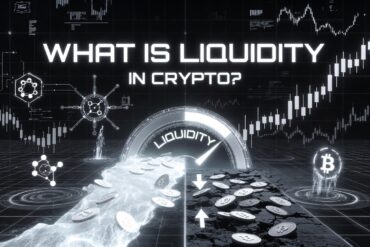
What Is Liquidity in Crypto? DEX Liquidity Explained for Solana Traders
Liquidity in crypto is the measure of how easily a token can be bought or sold at a stable price without causing significant price movement — determined by the total value of assets deposited in a trading pool or order book, and functioning as the foundational infrastructure that makes decentralized exchange trading on Solana platforms like Raydium, Jupiter, and Orca possible. A token with deep liquidity allows a $50,000 sell with minimal price impact; a token with thin liquidity collapses 40% on a $500 sell.
Read more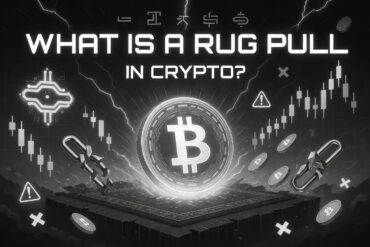
What Is a Rug Pull in Crypto? How to Spot and Avoid Them on Solana
A rug pull is a crypto scam in which the creators of a token deliberately abandon the project and drain all liquidity after attracting investor funds — leaving holders with worthless tokens and no way to sell, named after the idiom “pulling the rug out from under someone.” On Solana, rug pulls are the most common form of memecoin fraud in 2026, enabled by the near-zero cost of token creation on Pump.fun and the speed at which new tokens attract retail buyers before any due diligence is possible.
Read more