SPL tokens (Solana Program Library tokens) are digital assets created and managed on the Solana blockchain using the Token Program - a single shared on-chain program that standardizes how all fungible tokens, non-fungible tokens, and semi-fungible tokens behave across the entire network. Unlike Ethereum’s ERC-20 standard where every token deploys its own separate smart contract, all SPL tokens share one Token Program, enabling transfers for as little as $0.00025 per transaction with sub-second finality. In 2026, over 1.2 million unique SPL token mints exist on Solana mainnet - from USDC and PYUSD (stablecoins) to BONK and WIF (memecoins) to JUP and RAY (DeFi governance tokens) - all running on the same underlying standard. Understanding why SOL is required for every SPL token interaction is the practical foundation for working with this standard.
Read more
Memecoin Investment Risks: What Every Solana Trader Must Know
Solana memecoin investment carries five primary risk categories: rug pulls (developer abandons project after draining liquidity), liquidity manipulation (thin order books engineered to trap sellers), whale concentration (top holders controlling enough supply to single-handedly move price), technical risks (mint authority and freeze authority exploits), and behavioral risk (FOMO-driven entries at market tops that guarantee losses regardless of project quality). In 2025, an estimated $800M+ was lost across the Solana memecoin ecosystem - the vast majority from risks that were identifiable on-chain before the losses occurred. This guide maps each risk type and gives you the practical framework for investing in Solana memecoins without getting destroyed by avoidable mistakes.
Read more
How to Keep Your Solana Memecoins Safe in 2026
Keeping Solana memecoins safe in 2026 requires managing three distinct security layers simultaneously: wallet security (seed phrase storage, hardware wallet usage, and token approval management), on-chain verification (checking mint authority, freeze authority, and liquidity lock status before buying any new token), and behavioral security (phishing resistance, scam DM awareness, and transaction simulation before signing). Losses in the Solana memecoin ecosystem are almost never from blockchain-level hacks — they are from human error and social engineering that targets the wallet or the trader, not the network. Understanding how rug pulls work on Solana is the foundation of effective memecoin security.
Read more
Why Do You Need SOL to Send Memecoins on Solana?
SOL is the native gas token of the Solana blockchain and is required for every transaction – including sending memecoins (SPL tokens) – because Solana validators charge SOL fees to process and confirm each operation on the network. Beyond basic gas fees of approximately 0.000005 SOL per transfer, your wallet must also maintain enough SOL to cover “rent exemption” on token accounts (0.00148844 SOL per unique token type you hold after the September 2026 rent cut, SIMD-0437) and to fund the creation of new Associated Token Accounts (ATAs) the first time you receive any new SPL token. Understanding this three-layer SOL requirement is essential for anyone actively trading Solana memecoins without running into failed transactions.
Read more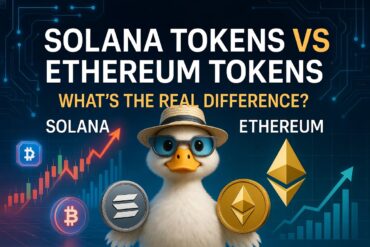
Solana Tokens vs Ethereum Tokens: What’s the Real Difference?
Solana tokens (SPL tokens) and Ethereum tokens (ERC-20, ERC-721) are both blockchain-native digital assets, but they differ fundamentally in architecture, cost, speed, and ecosystem design. Solana’s SPL token standard processes transfers in under a second for $0.00025 per transaction, while Ethereum’s ERC-20 standard offers broader institutional recognition and the deepest DeFi TVL in crypto at $48B+ - with average mainnet fees of $0.50 to $5+ per transaction depending on network congestion. Choosing between them in 2026 depends entirely on your use case: Solana wins on throughput and cost, Ethereum wins on liquidity depth, L2 ecosystem maturity, and brand recognition with traditional finance.
Read more
Solana Memecoin Season Summer 2026: Is a Rally Coming?
Solana memecoin season refers to cyclical periods of intense retail speculation on the Solana blockchain, characterized by surging Pump.fun launch volumes, elevated DEX activity on Jupiter and Raydium, and outsized price gains in community tokens — typically occurring when Bitcoin stabilizes above key levels and retail attention rotates from large-cap assets into high-risk, high-reward altcoins. In summer 2026, on-chain signals including rising active address counts (4.1M 7-day average), tightening funding rates on SOL perpetuals, and a BTC dominance hovering near the 52% rotation threshold all point toward conditions that historically precede a Solana memecoin rally within 4–8 weeks.
Read more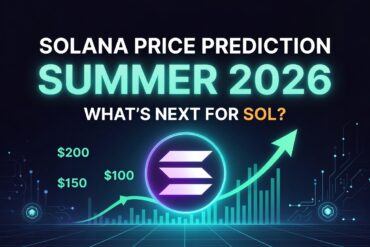
Solana Price Prediction Summer 2026: What’s Next for SOL?
Solana (SOL) is a high-throughput layer-1 blockchain trading at approximately $168 in May 2026, with summer 2026 price predictions ranging from a bearish $100 floor to a bull-case target of $200 and beyond, depending on macro conditions, ETF inflows, and on-chain activity metrics. SOL — also known as the native token of the Solana network — entered the summer cycle with 65,000+ TPS throughput, $8.2B+ TVL, and growing institutional participation from Franklin Templeton, Visa, and PayPal, creating a fundamentally different demand profile than in previous summer lulls.
Read more
Solana’s Next Chapter: From Memecoins to Institutional Money
Solana (SOL) is a high-performance blockchain that began as the world’s leading memecoin launchpad and is now undergoing a structural transformation into institutional-grade financial infrastructure. In 2026, Solana processes over 65,000 transactions per second with average fees below $0.001, making it a live settlement layer for tokenized real-world assets (RWAs), regulated DeFi protocols, and institutional payment rails - while its memecoin culture, built through platforms like Pump.fun, continues as one vertical among many rather than the network’s defining identity.
Read more
Top 5 Solana Memecoins to Watch in May 2026: Full Breakdown
Solana memecoins entering May 2026 are set up for amplified moves as Bitcoin’s confirmed $80K+ breakout drives the rotation sequence from BTC to ETH to SOL to memecoins — a pattern that has repeated in every Solana cycle since 2023. Five tickers stand out based on liquidity depth, community traction, and historical beta versus SOL price: BONK (the original Solana community airdrop token, December 2022), WIF (dogwifhat, tier-1 with $4.7B peak market cap), PNUT (Peanut the Squirrel, viral October 2024 launch with $1.6B peak), PENGU (Pudgy Penguins cross-chain brand with real-world IP), and PUMP (direct exposure to Pump.fun platform revenue). Each carries a distinct risk and return profile — knowing where each sits in the liquidity stack matters as much as picking the ticker itself.
Read more
Should You Invest in Solana Memecoins in May 2026? Risks Explained
Investing in Solana memecoins in May 2026 means operating in the highest-risk, highest-reward segment of the highest-volatility asset class in finance — where over 98% of tokens launched on Pump.fun never recover their launch-day high, SOL itself trades 68% below its January 2025 ATH of $295.9, and the few tokens that survive deliver 100x–1000x returns to early buyers. The question is not whether Solana memecoins carry risk — they carry extreme risk by design — but whether the current market structure in May 2026 offers asymmetric upside worth sizing a position around.
Read more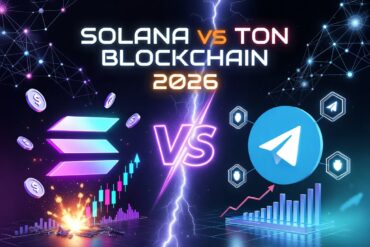
Solana vs TON Blockchain: Who Leads in May 2026?
Solana and TON are the two most actively developing Layer 1 blockchains in May 2026 - Solana dominates with $11.49B weekly DEX volume, a $53.5B market cap, and institutional infrastructure including Western Union’s USDPT stablecoin and 8 spot ETF products, while TON is staging a structural comeback driven by Telegram’s 950 million users, the “Make TON Great Again” roadmap, and Pavel Durov personally taking Telegram in as the network’s largest validator. They are not competing for the same market: Solana owns DeFi and memecoin trading, TON is building consumer payment rails inside a messaging app.
Read more
Why Is Solana Price Rising in May 2026? Key Drivers and Risks
Solana (SOL) is trading at $92.61 on May 9, 2026 — up from a local low near $78 in late March — driven by a convergence of institutional stablecoin adoption, record DEX volume, and improving macro sentiment, while a technically active death cross and six consecutive months of declining ETF inflows keep the bull case fragile. SOL sits 68% below its all-time high of $295.9 set in January 2025, with a $53.5B market cap and the most on-chain activity of any Layer 1 blockchain by weekly DEX volume.
Read more
What Is Liquidity in Crypto? DEX Liquidity Explained for Solana Traders
Liquidity in crypto is the measure of how easily a token can be bought or sold at a stable price without causing significant price movement — determined by the total value of assets deposited in a trading pool or order book, and functioning as the foundational infrastructure that makes decentralized exchange trading on Solana platforms like Raydium, Jupiter, and Orca possible. A token with deep liquidity allows a $50,000 sell with minimal price impact; a token with thin liquidity collapses 40% on a $500 sell.
Read more
What Is a Rug Pull in Crypto? How to Spot and Avoid Them on Solana
A rug pull is a crypto scam in which the creators of a token deliberately abandon the project and drain all liquidity after attracting investor funds — leaving holders with worthless tokens and no way to sell, named after the idiom “pulling the rug out from under someone.” On Solana, rug pulls are the most common form of memecoin fraud in 2026, enabled by the near-zero cost of token creation on Pump.fun and the speed at which new tokens attract retail buyers before any due diligence is possible.
Read more
Pump.fun vs Jupiter: Where to Trade Solana Memecoins in 2026?
The choice between Pump.fun and Jupiter for trading Solana memecoins depends entirely on the stage of the token’s lifecycle — Pump.fun is the optimal venue for buying tokens in their first minutes of existence on the bonding curve before graduation, while Jupiter is the superior execution environment for all post-graduation trading where deeper liquidity, smart order routing, and limit orders eliminate the slippage and manipulation risks inherent to early bonding curve trading. The two platforms are not competitors — they are sequential tools that cover different phases of the same memecoin trade.
Read more
What Is Jupiter Exchange? Solana’s DEX Aggregator Explained (2026)
Jupiter Exchange (jup.ag) is a decentralized exchange aggregator on the Solana blockchain that routes token swaps across all major Solana DEXes — including Raydium, Orca, Meteora, and Phoenix — to find the best execution price for any SPL token trade, processing over 80% of all Solana DEX volume in 2026 and functioning as the de facto trading layer for the entire Solana ecosystem including memecoins, stablecoins, and DeFi assets. Jupiter is not a DEX itself — it is the routing intelligence layer that sits on top of every DEX on Solana simultaneously.
Read more
What Is a Contract Address in Crypto? Why It Matters for Memecoins
A contract address (also called a token address or mint address on Solana) is a unique string of letters and numbers that permanently and unambiguously identifies a specific token on the blockchain — distinguishing the real asset from thousands of identically named fakes, scam clones, and impersonator tokens launched daily on Pump.fun and Raydium. On Solana, a contract address looks like this: EPjFWdd5AufqSSqeM2qN1xzybapC8G4wEGGkZwyTDt1v — that specific string is USDC on Solana and nothing else, regardless of what any token calls itself.

What Is Market Cap on Pump.fun? Explained for Solana Memecoin Traders
Market Cap on Pump.fun is the total value of a token’s circulating supply calculated in USD — determined by multiplying the current token price by the total number of tokens in existence — and serves as the primary metric for measuring a Pump.fun token’s size, stage on the bonding curve, and distance from the $69,000 graduation threshold that unlocks Raydium liquidity. Unlike price per token, market cap accounts for supply size and gives traders a normalized way to compare tokens regardless of how cheap or expensive individual coins appear.
Read more
Top Holders on Pump.fun: What It Means and How to Analyze It
Top Holders on Pump.fun is a wallet concentration metric that shows the percentage of a token’s total supply held by the largest individual wallet addresses — used by Solana memecoin traders to assess rug pull risk, dev wallet exposure, and the likelihood of a coordinated dump before or after graduation to Raydium. A healthy Pump.fun token shows distributed ownership across hundreds of wallets; a dangerous one shows 2–3 wallets controlling 30%+ of supply.
Read more
What Is ATH on Pump.fun? All-Time High Explained for Solana Traders
ATH on Pump.fun (All-Time High) is the highest market capitalization a token has ever reached on the Pump.fun bonding curve or after graduating to Raydium — expressed in USD and used by traders to gauge a token’s peak hype, current distance from its top, and potential for recovery or further decline. On Pump.fun, ATH is one of the most-watched metrics because the majority of tokens never exceed their launch-day ATH, making it a key indicator of whether a token is in price discovery or in a slow bleed.
Read more
Pump.fun vs DEXScreener 2026: Differences and Which to Use
Pump.fun is a Solana memecoin launchpad that lets anyone create and trade brand-new SPL tokens within minutes, while DEXScreener is a real-time DEX analytics and charting platform that tracks price, volume, and liquidity across 80+ blockchains including Solana. The two tools serve completely different purposes — Pump.fun is where memecoins are born, DEXScreener is where traders monitor them — and in 2026 the most effective Solana memecoin traders use both together as part of the same workflow.
Read more
How to Buy Solana Memecoins Without KYC in 2026
Buying Solana memecoins without KYC means purchasing SPL tokens — including BONK, WIF, PENGU, and FARTCOIN — directly on-chain via a self-custodial wallet and a decentralized exchange (DEX), with no identity verification, no account registration, and no centralized intermediary. In 2026, the combination of Solana’s $0.00025 average transaction fees and DEX aggregators like Jupiter makes KYC-free memecoin trading faster and cheaper than any centralized exchange alternative.
Read more
Top 5 Solana Wallets for Memecoins in April 2026
A Solana memecoin wallet is a non-custodial crypto wallet that supports the Solana blockchain, enabling users to store, send, and trade SPL tokens - including high-volatility memecoins like BONK, WIF, POPCAT, and MOTHER. The best Solana wallets for memecoins combine fast transaction signing (Solana slots run about 200ms), built-in DEX access, and multi-chain support for bridging gains into stablecoins like USDT or USDC.
Read more
What Is Solana Blockchain? Why It Dominates Memecoins in 2026
Solana is a high-speed, low-fee blockchain platform that processes thousands of transactions per second using its unique Proof of History (PoH) consensus mechanism, making it…
What Are Memecoins? The Complete Guide for 2026
Memecoins are a category of cryptocurrency inspired by internet memes, viral culture, and community humor, driven by social momentum rather than technical fundamentals or corporate…